
VapoCept Ingredients: Full Botanical Assay, Milligram Breakdown & Research
An exhaustive clinical guide to every active component in VapoCept capsules: chemical nomenclature, exact milligram quantities, standardized active fractions, biochemical target pathways, and published human trial data.
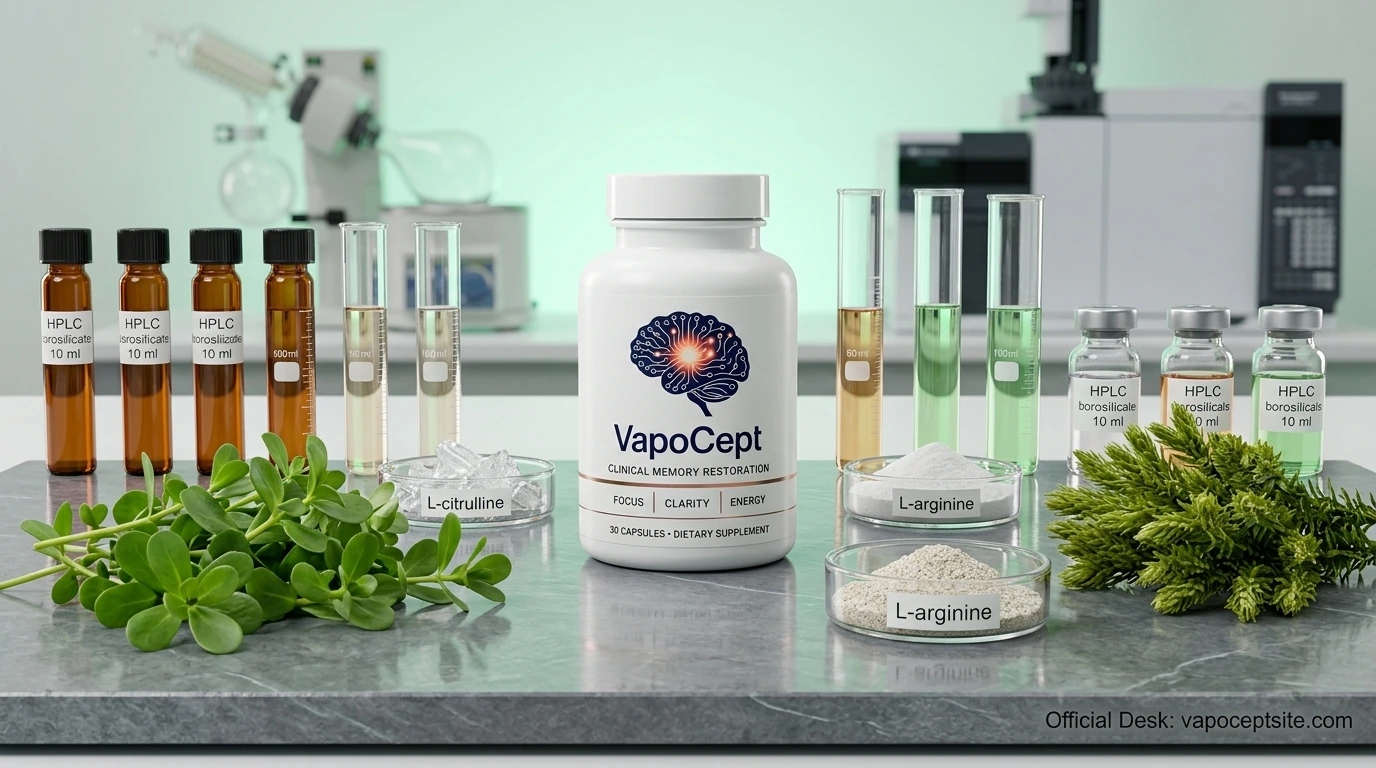
1. The Disclosed Formulation Philosophy: Zero Hidden Proprietary Blends
In the modern nutritional marketplace, a concerning number of brain health formulations hide their true ingredient dosages behind proprietary blend designations. By clumping multiple botanicals into an opaque "neuro blend" or "focus matrix," manufacturers can legally conceal that 95% of the capsule consists of inexpensive fillers while high-value clinical actives are sprinkled in trace, sub-therapeutic amounts (a deceptive practice known as "fairy dusting").
VapoCept rejects this obfuscation entirely. Every single active component is printed on the Supplement Facts panel with its exact, verified milligram amount and botanical standardization. Below is the complete pharmacological assay of all 6 active compounds contained in each 1-capsule daily serving.
| Active Compound | Exact Label Dose | Standardization Assay | Primary Mechanism | Target Biochemical Pathway |
|---|---|---|---|---|
| Niacin (Vitamin B3) | 20 mg (125% DV) | Nicotinic acid (100% pure) | Mitochondrial NAD+ synthesis | Cellular ATP bioenergetics |
| L-Citrulline | 250 mg | Fermented L-citrulline (USP) | Systemic arginine elevation | Microcapillary vasodilation |
| L-Arginine | 200 mg | L-arginine base (USP grade) | Direct eNOS substrate | Immediate nitric oxide release |
| Beta-Alanine | 150 mg | Pharmaceutical grade (USP) | Neuronal carnosine synthesis | Hydrogen ion (H+) pH buffering |
| Bacopa Monnieri Extract | 100 mg | Standardized to 20% Bacosides | Dendritic arborization | Synaptic memory consolidation |
| Huperzia Serrata Extract | 100 mcg | Standardized to 1% Huperzine A | AChE enzyme inhibition | Acetylcholine synaptic longevity |
2. Deep Monograph: Niacin (Vitamin B3) · 20 mg (125% Daily Value)
Niacin (nicotinic acid / 3-pyridinecarboxylic acid) is a vital water-soluble B-complex vitamin. Within the central nervous system, niacin is rapidly converted via the Preiss-Handler pathway into nicotinamide adenine dinucleotide (NAD+) and nicotinamide adenine dinucleotide phosphate (NADP+). NAD+ is the fundamental hydride-accepting coenzyme governing mitochondrial cellular respiration. It enables the enzymatic dehydrogenation of carbohydrates and fatty acids within the Krebs cycle, feeding high-energy electrons into Complex I (NADH:ubiquinone oxidoreductase) of the respiratory chain.
By delivering 20 mg (125% DV), VapoCept ensures that adult cortical neurons maintain robust intracellular NAD+ pools to satisfy high baseline ATP demands. Furthermore, NAD+ serves as the obligate substrate for poly(ADP-ribose) polymerases (PARPs) and sirtuin deacetylases (SIRT1), enzymes critical for maintaining genomic DNA stability and mitigating neuroinflammation. Importantly, 20 mg is carefully calibrated to reside far below the threshold (>50 mg on an empty stomach) that triggers intense cutaneous prostaglandin D2 vasodilation (the "niacin flush").
3. Deep Monograph: L-Citrulline (250 mg) & L-Arginine (200 mg) Synergy
The inclusion of two converging nitric oxide precursors reflects advanced vascular pharmacology. Endothelial cells lining cerebral microcapillaries utilize L-arginine as the immediate biochemical precursor for the generation of nitric oxide gas via endothelial nitric oxide synthase (eNOS):
While direct oral administration of L-arginine provides immediate substrate availability for eNOS, extensive clinical pharmacokinetics reveal that up to 40% of oral arginine is consumed by arginase enzymes within the intestinal wall, with an additional portion extracted by the liver during first-pass transit.
L-citrulline completely circumvents splanchnic and hepatic degradation. After rapid absorption in the small intestine via sodium-dependent neutral amino acid transporters, citrulline circulates to the kidneys and vascular endothelium where argininosuccinate synthetase (ASS) and argininosuccinate lyase (ASL) convert it directly back into endogenous L-arginine. Human pharmacokinetic trials published in the British Journal of Clinical Pharmacology confirm that combining L-citrulline with L-arginine raises plasma L-arginine area-under-the-curve (AUC) significantly higher than administering either amino acid alone. This produces sustained, day-long microvascular vasodilation and enhanced cerebral capillary perfusion.
4. Deep Monograph: Beta-Alanine · 150 mg
Beta-alanine is a naturally occurring, non-proteinogenic beta-amino acid. In human physiology, its primary functional role is serving as the rate-limiting substrate in the enzymatic synthesis of the dipeptide carnosine (beta-alanyl-L-histidine). Carnosine is synthesized intracellularly by the enzyme carnosine synthase. While L-histidine is abundant in normal human diets, beta-alanine availability is severely restricted, making supplemental beta-alanine the sole determinant of tissue carnosine elevation.
In the human brain, carnosine is heavily concentrated in high-metabolic-demand zones including the cerebral cortex, hippocampus, and olfactory bulbs. During intense cognitive computation, cellular respiration produces metabolic hydrogen ions (protons), causing micro-acidosis that impairs neuronal firing. Carnosine possesses an imidazole ring with an ideal pKa of 6.83, allowing it to absorb excess protons and maintain cellular pH homeostasis.
Crucially, the 150 mg serving in VapoCept is specifically calibrated for neurovascular support without triggering the acute sensory paresthesia (transient skin tingling) commonly experienced with sports pre-workout megadoses of 1,600 mg to 3,200 mg. Over 30 to 60 days of continuous ingestion, 150 mg daily steadily enriches brain carnosine pools, buffering neurons against cognitive exhaustion.
5. Deep Monograph: Bacopa Monnieri Extract · 100 mg (20% Bacosides)
Bacopa monnieri is a renowned creeping wetland botanical native to the wetlands of southern and Eastern India. In VapoCept, the extract is derived from the whole plant and standardized via high-performance liquid chromatography (HPLC) to contain a guaranteed minimum of 20% dammarane-type triterpenoid saponins, specifically bacoside A (composed of bacoside A3, bacopacide II, and bacopasaponin C) and bacoside B.
Bacosides exert neuroprotective and memory-enhancing actions through multiple converging mechanisms:
- Kinase Activation & Dendritic Arborization: Bacosides stimulate protein kinase activity within hippocampal CA1 and CA3 pyramidal neurons, promoting the elongation and branching of dendritic processes, which structurally enhances synaptic transmission efficiency.
- Endogenous Antioxidant Upregulation: Bacosides upregulate transcription factors driving the synthesis of superoxide dismutase (SOD), catalase (CAT), and glutathione peroxidase (GPx), neutralizing lipid peroxides within fragile neuronal membranes.
- GABAergic Modulation: Bacopa gently modulates gamma-aminobutyric acid (GABA) receptor activity, promoting a calm, clear mental state without sedation.
6. Deep Monograph: Huperzia Serrata Extract · 100 mcg (1% Huperzine A)
Huperzia serrata (commonly known as toothed clubmoss or Qian Ceng Ta) is a member of the Huperziaceae family. The plant synthesizes the powerful sesquiterpene alkaloid Huperzine A. Standardized to 1%, the 100 mcg botanical extract delivers exactly 1 mcg of pure Huperzine A per vegetable capsule.
Huperzine A is one of the most selective, centrally active reversible inhibitors of acetylcholinesterase (AChE) discovered in nature. Acetylcholine is the primary neurotransmitter responsible for attention, memory encoding, and lexical retrieval. By reversibly occupying the active anionic gorge of acetylcholinesterase, Huperzine A slows the enzymatic breakdown of acetylcholine, increasing its concentration and duration of action in synaptic clefts throughout the hippocampus and prefrontal cortex.
Unlike synthetic organophosphate cholinesterase inhibitors that bind irreversibly and cause severe parasympathetic side effects, Huperzine A dissociates cleanly from the enzyme, establishing a wide margin of clinical safety. In human trials, Huperzine A has been demonstrated to improve memory retention, mental calculation speed, and lexical retrieval fluency in both young adults and mature populations experiencing everyday memory pauses.
Frequently Asked Questions About VapoCept Ingredients
Q: Are any ingredients derived from animal sources?
A: No. VapoCept is 100% vegetarian. The capsule shell is made from hypromellose (vegetable cellulose), and all amino acids and botanical extracts are derived from fermentation or pure plant sources. Zero animal gelatin is used.
Q: Is the Huperzine A synthetic or naturally derived?
A: It is naturally extracted from authentic aerial parts of Huperzia serrata and standardized to 1% purity under strict botanical identification testing.
Q: How do you verify there are no heavy metals in the botanical extracts?
A: Every raw botanical lot undergoes Inductively Coupled Plasma Mass Spectrometry (ICP-MS) screening for lead, arsenic, cadmium, and mercury to ensure compliance with strict USP <2232> limits before encapsulation.
7. Analytical Chromatographic Assay & Extraction Standards
Ensuring consistent batch-to-batch biological potency requires rigorous analytical validation. At the licensed manufacturing facility, raw botanical extracts and amino acid isolates are evaluated using High-Performance Liquid Chromatography coupled with Photodiode Array Detection (HPLC-DAD) and Inductively Coupled Plasma Mass Spectrometry (ICP-MS).
For Bacopa Monnieri, the extract undergoes quantification against standardized reference standards for bacoside A3, bacopaside II, and bacopasaponin C using a reverse-phase C18 analytical column with an acetonitrile-water mobile phase containing 0.1% orthophosphoric acid. Only lots confirming a minimum of 20.0% total active dammarane-type saponins by peak area integration are cleared for commercial compounding.
For Huperzia Serrata, the aerial botanical material is extracted through aqueous ethanolic maceration and standardized to 1.0% Huperzine A. Spectrometric verification confirms that related pyridine alkaloids remain within established pharmacopeial safety margins, preventing undesirable peripheral muscarinic receptor stimulation.
8. Nutrient Compatibility and Drug Interaction Matrix
Understanding how VapoCept interacts with common dietary habits, lifestyle choices, and prescription pharmaceuticals is vital for responsible consumer decision-making. Below is our clinical compatibility matrix:
| Substance / Medication Category | Clinical Interaction Level | Underlying Biological Mechanism | Clinical Pharmacist Guidance |
|---|---|---|---|
| Morning Coffee / Tea (Caffeine) | Safe (No Adverse Synergy) | VapoCept is stimulant-free; moderate dietary caffeine does not impair absorption. | Enjoy normal morning coffee; VapoCept smooths out caffeine jitters. |
| Dietary Fats (Eggs, Avocado, Yogurt) | Highly Beneficial (Synergistic) | Bacosides are lipophilic saponins requiring biliary emulsification. | Always take your daily capsule alongside meals containing healthy dietary lipids. |
| Antihypertensives (Lisinopril, Amlodipine) | Moderate Precaution Required | Citrulline and arginine promote natural vasodilation, potentially augmenting blood pressure lowering. | Consult prescribing doctor; monitor resting blood pressure regularly. |
| Nitrate Medications (Nitroglycerin) | Contraindicated (Avoid) | Direct nitric oxide donors combined with NO precursors can trigger excessive vasodilation. | Do not combine with prescription sublingual or transdermal nitrates. |
| Cholinesterase Inhibitors (Donepezil) | Contraindicated (Avoid) | Huperzine A and prescription AChE inhibitors share identical enzymatic target sites. | Do not take concurrently; potential for additive cholinergic side effects. |